Call anytime or send the form. Either way, you get a site visit and an itemized quote.
Why Dumpster Pads Fail
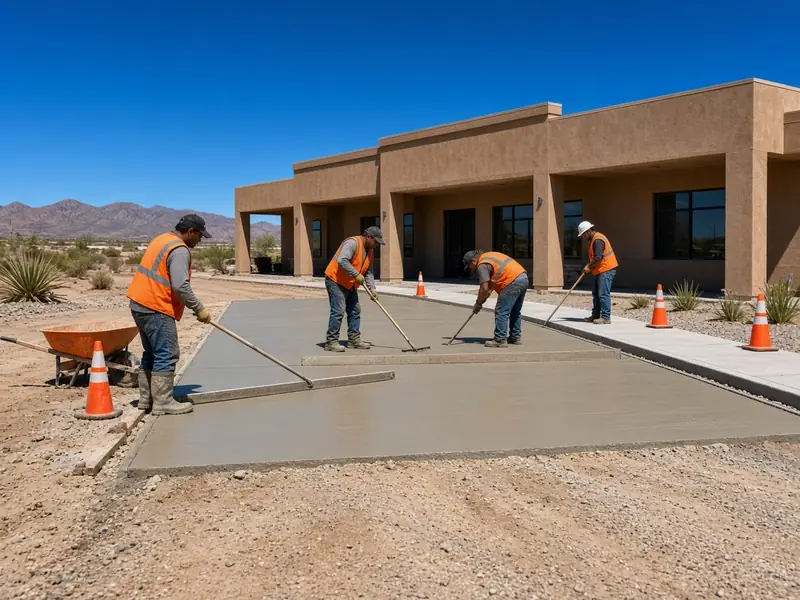
A front-load trash truck sets its full weight on its front wheels as it lifts the container, often several times a week, in the same spot. Steel container wheels and skids grind the surface. On asphalt, that leaves ruts and potholes right in front of the enclosure. A thick, reinforced concrete pad that extends out far enough to carry the truck's front wheels, not just the container, is what holds up. We size the pad and approach for the truck's path, not only for the dumpster footprint.
Enclosures and Bollards
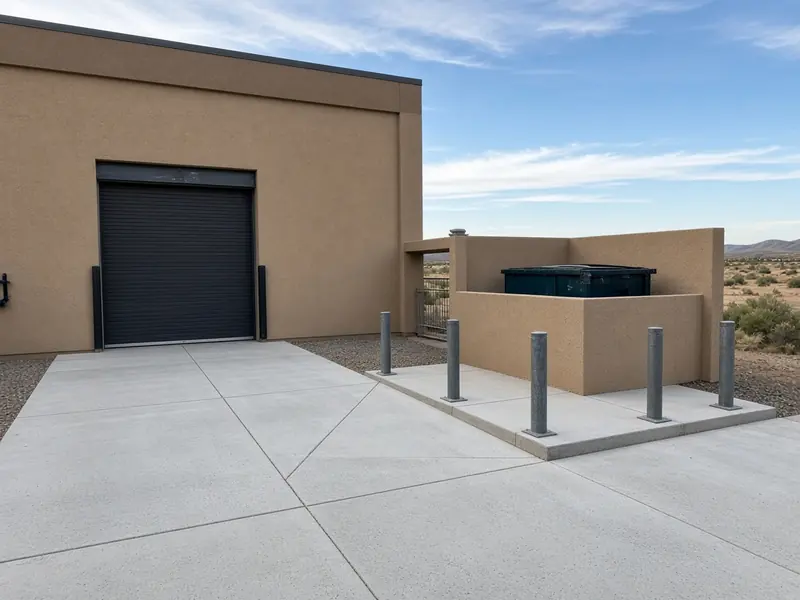
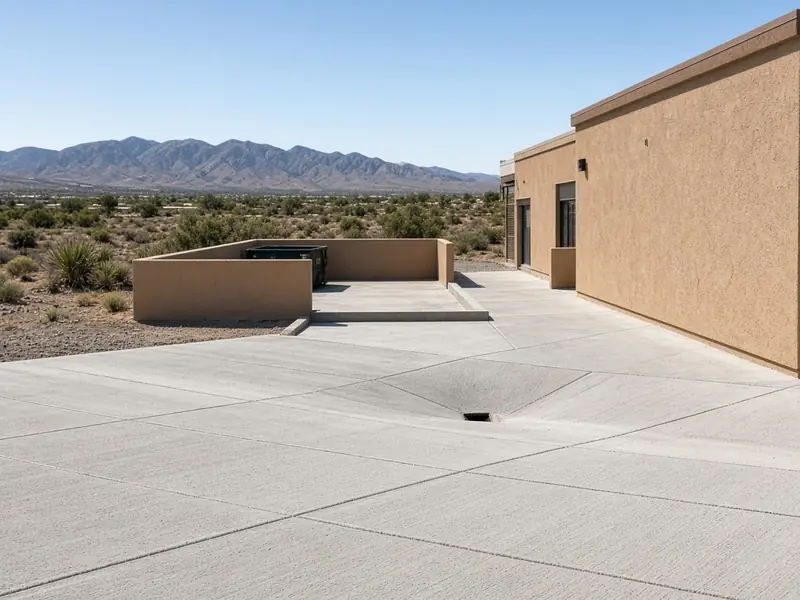
Many commercial sites put dumpsters inside masonry enclosures with gates. The pad, the footings for enclosure walls and gate posts, and protective bollards can all be poured as one job. Rio Rancho's zoning code includes concrete and masonry walls among buffer walls between commercial and residential property, so if your site plan shows an enclosure or wall, it should match the approved plan.
Loading Dock Aprons
The apron in front of a dock door carries trailers as they back in, trailer landing gear while they're parked, and forklifts coming on and off the trailer. That combination crushes asphalt and breaks thin concrete at the joint with the building. A concrete apron built thicker than the parking lot, with joints laid out so trailer wheels and landing gear don't sit on an edge, and with drainage that keeps water out of the dock pit, lasts far longer.
Equipment and Transformer Pads
Generators, chillers, transformers and rooftop-unit staging all need level, solid pads set to the manufacturer's or utility's dimensions. We pour to the equipment drawings and coordinate with the electrical or mechanical contractor on conduit stub-ups and anchor bolts.
Built for the Weather
Rio Rancho's concrete specification for public work calls for at least 3,000 psi concrete at 28 days with 3 to 6 percent air entrainment, and the American Concrete Pavement Association explains that air entrainment helps concrete resist freeze-thaw damage and deicer scaling. Dumpster pads collect water and spilled liquids, so we slope them to drain and follow the same air-entrained mix approach outside.