
Skip to content
Call (505) 371-4111

RV Pads & Driveway Extensions Rio Rancho NM - Concrete Parking Pads & Widening

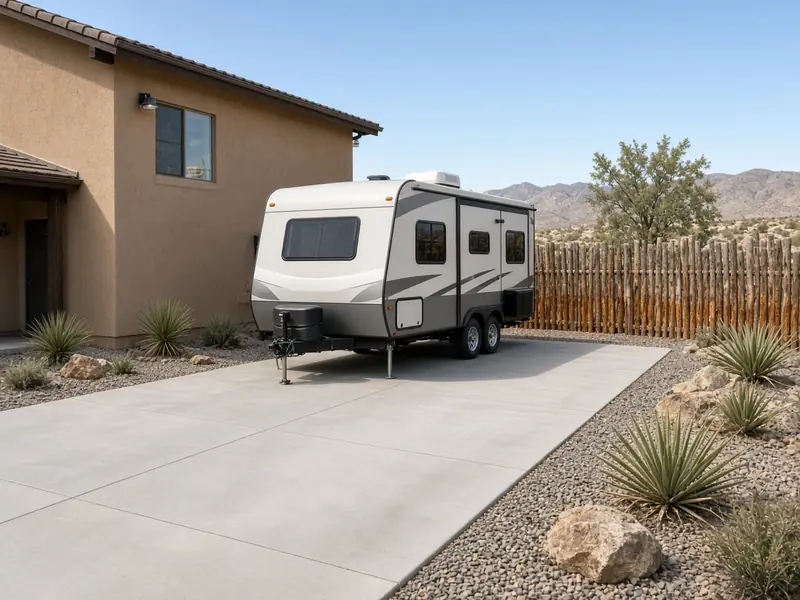
RV pads and driveway extensions in Rio Rancho turn a dirt or gravel side yard into a solid, level place to park a motorhome, trailer, boat or extra car.

New concrete RV pad along the side yard of a stucco home with a travel trailer parked on it

They're built thicker than a walkway and tied into the driveway you already have.

Request a site visit and itemized quote

Rather talk it through?

(505) 371-4111

Call anytime or send the form. Either way, you get a site visit and an itemized quote.

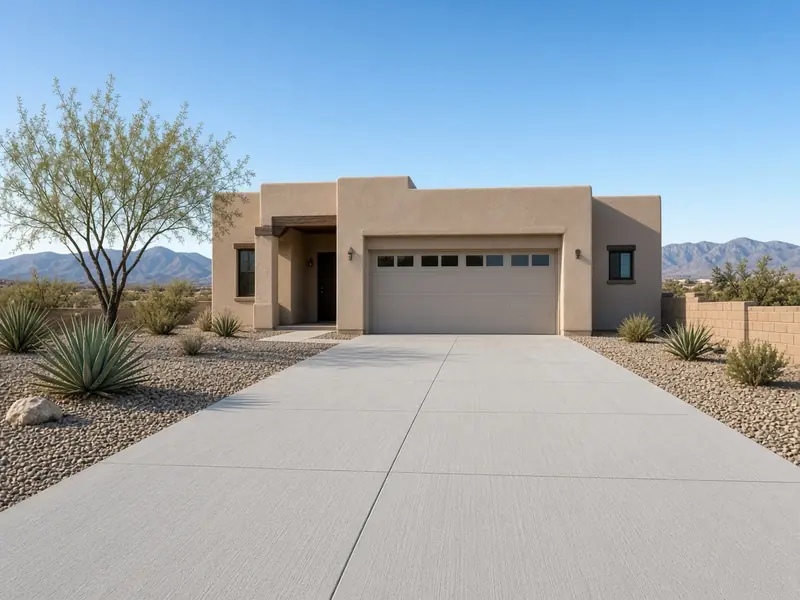
New broom-finish concrete driveway with saw-cut joints leading to the garage of a tan stucco home

Why Pour a Pad Instead of Gravel

Gravel ruts under trailer jacks and tires, tracks into the garage, and lets weeds and dust in. Rio Rancho's zoning code defines a driveway as an "all-weather" vehicular access way, and a parking space as at least 9 feet wide and 18 feet long, connected to the street by a driveway at least 10 feet wide. A concrete pad is about as all-weather as a parking surface gets, and it holds its shape for decades.

The same code allows poured slabs, pads and driveways inside setbacks, but puts the burden on the owner to get written permission from any utility whose easement the slab would sit on. Side yards and back lots often carry easements, so we check the plat before we lay out a pad.

Thickness for Heavy Loads

The weight on an RV pad sits on a few small points: tires, leveling jacks and a trailer tongue. HomeGuide's guidance for driveways is 4 inches of concrete for everyday cars and 5 to 6 inches for RVs and heavy vehicles, with edges thickened to 6 to 8 inches. HomeGuide's 2026 price for 6-inch driveway concrete is $8 to $20 per square foot, against $6 to $15 for standard 4-inch work. We set the thickness by the heaviest thing that will park there and add reinforcement where jacks and tongue weight concentrate.

Base Work on Desert Soil

A heavy pad on loose or poorly compacted fill will settle at the corners. Collapsible soils, which compact when they get wet, are common in New Mexico according to the New Mexico Bureau of Geology and Mineral Resources. Side yards often collect roof runoff from the house next to them. So we dig out loose material, compact the base in lifts, and slope the pad so water runs away from both foundations instead of soaking the ground under the slab.
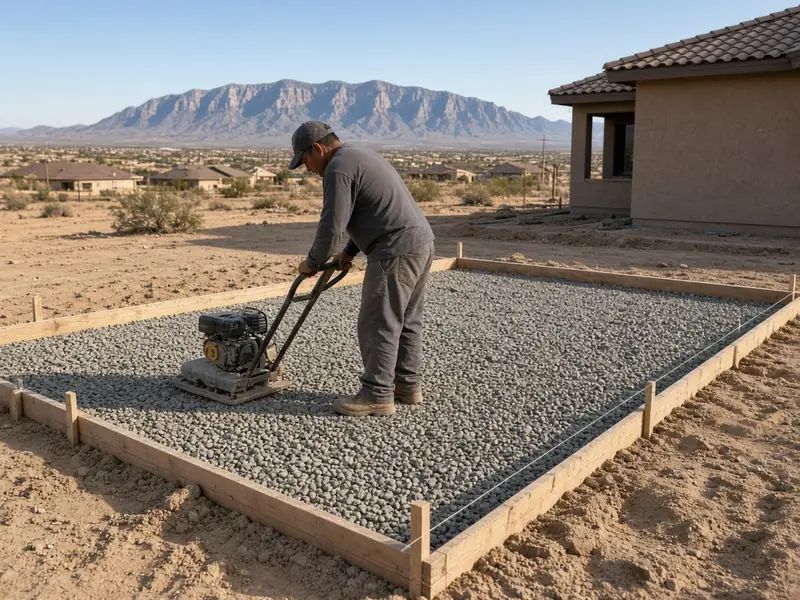
Worker running a plate compactor over a gravel base inside new forms, with the Sandia Mountains behind

Tying Into the Existing Driveway

A good extension looks like it was poured with the house. We match the height and slope of the existing driveway, line up control joints with the old ones, and use a broom direction and edge detail that matches. Where the new pad meets the old slab, we isolate or dowel the joint depending on how the two pieces need to move. If your plan needs a wider curb cut or a new approach in the street, that's right-of-way work with its own City permit; see driveway approaches and curb cuts.

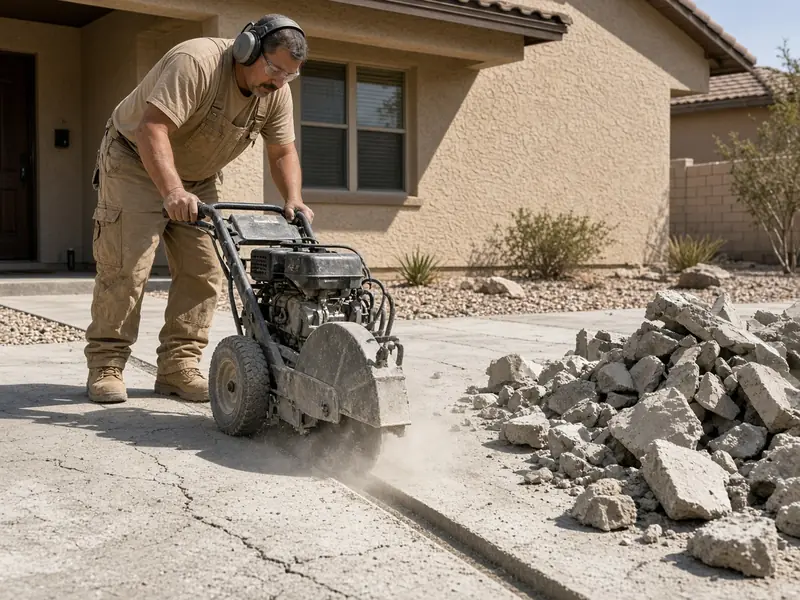
Worker saw-cutting a straight line through an old cracked concrete slab before removal

Gates, Walls and Access

Most side-yard pads sit behind a wall or gate. We measure gate openings and turning room before we quote, because a pad you can't back a trailer onto isn't much use. Rio Rancho requires a permit for retaining walls and fences, so if the project includes moving or rebuilding a wall, that permit goes on the schedule.

Request a Quote

Tell us what you'll park and send a photo of the side yard. Call (505) 371-4111 anytime or use the form.

New concrete RV pad along the side yard of a stucco home with a travel trailer parked on it

Back to Rio Rancho Concrete Works for driveways, patios and the rest of our services.

Call (505) 371-4111Request a Quote